

Glaucoma Treatment
Home >> Glaucoma Treatment
All services
Glaucoma Treatment in Swargate Pune for Early Detection and Vision Protection
A Condition That Works in Silence
There is something particularly challenging about glaucoma — most people who have it feel completely fine. No headache, no redness, no sudden drop in vision. Life continues as normal while, beneath the surface, the optic nerve is slowly being affected.
By the time a patient notices something has changed — perhaps a slight narrowing of side vision, or difficulty seeing in low light — the condition has often been present for years. This is the nature of glaucoma, and it is precisely why awareness, routine screening, and timely care matter so much.
At Clear Sight Eye Care Centre, we provide Glaucoma Treatment in Swargate Pune with a focus on early detection, accurate monitoring, and individualised management. Our aim is to help patients understand their condition clearly and stay ahead of it — before vision is affected in a way that cannot be reversed.
Understanding Glaucoma Simply Put
The eye constantly produces a clear fluid called aqueos humour that flows through internal channels and drains out naturally. This process maintains a steady pressure inside the eye. When drainage slows or becomes obstructed, pressure gradually builds up. Over time, this elevated pressure affects the optic nerve — the structure responsible for sending visual signals from the eye to the brain.
Once optic nerve fibres are damaged, they do not recover. The vision associated with those fibres is permanently lost. This is what makes glaucoma fundamentally different from conditions like cataracts, where vision can be fully restored with surgery.
It is worth noting that not every glaucoma patient has high eye pressure. A less common but equally serious form called normal-tension glaucoma causes optic nerve damage even when pressure readings fall within the accepted range. This is why comprehensive evaluation — not pressure measurement alone — is essential for accurate diagnosis.
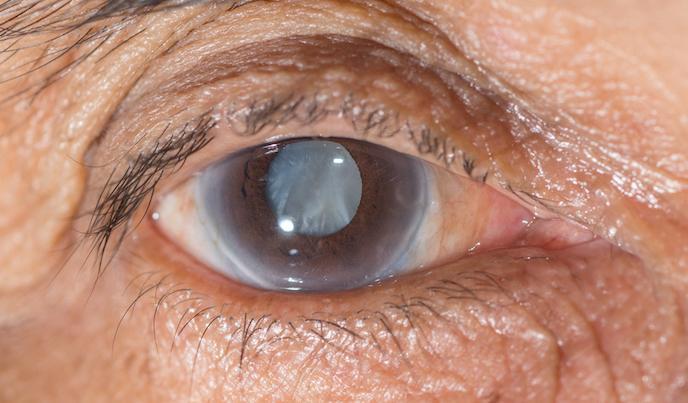
Recognising the Early Signs of Glaucoma
Patients frequently search: what are the early signs of glaucoma? The honest answer is that in the most widespread form of the condition — primary open-angle glaucoma — there are typically no early signs at all. Vision remains clear and comfortable. There is no discomfort. Routine daily activities feel completely unaffected.
The first change patients eventually notice is a gradual loss of peripheral vision — the ability to see objects to the side without turning the head. This happens so slowly that the brain compensates for a long time, masking the loss until it becomes significant.
Acute angle-closure glaucoma behaves very differently. This form develops rapidly and produces symptoms that are hard to ignore:
- Sudden, intense pain centred around one eye
- Vision that becomes hazy or blurred within hours
- Coloured rings appearing around light sources
- Nausea or vomiting accompanying the eye pain
- Noticeable redness of the affected eye
This is a medical emergency. If these symptoms occur, immediate attention at an eye clinic in Swargate Pune is essential — every hour matters in preventing permanent damage.
Who Should Be Screened for Glaucoma?
Glaucoma does not discriminate by age entirely, but certain individuals carry a meaningfully higher risk and should prioritise regular screening:

Anyone above the age of 40, with risk rising steadily thereafter

Individuals with a parent, sibling, or child diagnosed with glaucoma

Those with significant short-sightedness or long-sightedness
People managing diabetes or cardiovascular conditions

Individuals with a history of eye trauma or previous eye surgery
If any of these apply to you, a comprehensive glaucoma evaluation — even in the complete absence of symptoms — is a worthwhile and potentially sight-saving step.
Advanced Glaucoma Treatment — For Complex Cases
Some patients arrive with already advanced disease, or develop progression despite standard treatment. Advanced glaucoma treatment in these situations involves a more layered approach — potentially combining surgical drainage procedures with continued medication, or exploring tube shunt surgery where conventional filtration is not suitable.
Managing these cases requires careful judgement, detailed imaging, and regular visual field analysis to track whether the current plan is achieving the desired stability. The approach is adjusted based on objective data, not assumptions.

Glaucoma Treatment Options — A Clear Overview
When patients ask about glaucoma treatment options, the first thing to understand is that the goal of treatment is preservation, not cure. No current treatment restores vision that has already been lost, but the right management can halt or significantly slow further damage.
Prescription Eye Drops
For the majority of patients, medicated drops form the foundation of glaucoma management. These work by either reducing the amount of fluid the eye produces or improving its drainage — both of which bring intraocular pressure down to a safer level.
Consistency is everything with glaucoma drops. Missing doses allows pressure to rise, and uncontrolled pressure means continued optic nerve damage. Patients who struggle with remembering drops or experience side effects should discuss this openly with their doctor rather than quietly stopping treatment.
Laser Treatment for Glaucoma
Laser treatment for glaucoma — specifically a procedure called Selective Laser Trabeculoplasty or SLT — uses precisely targeted light energy to improve the eye’s natural drainage system. It is performed in a clinical setting, takes only a few minutes, and does not require any cuts or stitches.
SLT is effective for many patients with open-angle glaucoma and can reduce or sometimes replace the need for daily eye drops. It may be recommended as a first-line option or as an addition to existing treatment depending on how well pressure is being controlled.
Surgical Intervention
When drops and laser treatment together are unable to bring pressure to a sufficiently safe level, surgery is considered. The traditional approach — trabeculectomy — creates a small controlled opening that allows fluid to drain more freely, forming a filtering bleb beneath the upper eyelid.
Newer minimally invasive glaucoma surgical techniques have also become available in recent years, offering options with shorter recovery periods and reduced complication risk for suitable candidates.
How to Reduce Eye Pressure in Glaucoma
Beyond prescribed treatment, certain habits support healthier intraocular pressure. Regular moderate physical activity has been shown to have a modest pressure-lowering effect. Limiting excessive caffeine intake, maintaining good hydration, sleeping with the head slightly elevated, and avoiding activities that involve prolonged breath-holding or straining may all contribute to better pressure management alongside medical care.
Monitoring — The Part of Glaucoma Care That Cannot Be Skipped
Understanding glaucoma symptoms and treatment together means recognising that monitoring is treatment. A prescription without follow-up is incomplete care. Regular assessments at our clinic include:
- Intraocular pressure measurement at each visit
- Optic nerve head examination to assess structural changes over time
- Visual field testing to map any developing loss of peripheral vision
- OCT imaging, which provides a detailed cross-sectional view of the optic nerve and the surrounding retinal nerve fibre layer
These assessments, repeated at appropriate intervals, tell the doctor whether the condition is stable, slowly progressing, or requiring a treatment change. Stable results mean the current plan is working — and that is genuinely good news worth attending appointments for.
Glaucoma Care
Clear Sight Eye Care Centre provides a dedicated Glaucoma clinic in Swargate Pune where patients receive thorough evaluation and long-term management under the care of Dr. Bhaktee Thipase. As an experienced Glaucoma Doctor in Swargate Pune, Dr. Thipase brings a methodical and patient-focused approach to every consultation — taking time to explain findings clearly, discuss options honestly, and build a care plan that works for each individual.
For patients seeking a qualified Glaucoma Specialist without travelling to busier parts of the city, our Swargate location is accessible from Sahakar Nagar, Mukund Nagar, Dhankawadi, Bibwewadi, Katraj, Parvati, and surrounding areas of Pune. Our goal as a Best Glaucoma Specialist in Pune is not a title — it is a standard of care we work toward with every patient we see.
Frequently Asked Questions About Glaucoma
While the risk increases considerably with age, glaucoma can develop at any stage of life. Juvenile glaucoma affects younger individuals, and secondary glaucoma can occur as a result of injury, inflammation, or steroid use at any age. Age is a risk factor, not a prerequisite.
Not necessarily. Normal-tension glaucoma causes optic nerve damage despite pressure readings within the accepted range. A full glaucoma evaluation includes optic nerve assessment and visual field testing — not just a pressure reading. Normal pressure is reassuring but does not entirely rule out the condition.
For most patients with chronic open-angle glaucoma, treatment is lifelong. The condition does not resolve — it is managed over the long term. Patients who remain consistent with their treatment and monitoring appointments can maintain good stability for many years.
It commonly does, though it may affect one eye more significantly than the other. Both eyes are evaluated at every appointment, and treatment is tailored to each eye’s individual pressure and nerve status.
In open-angle glaucoma, typically no. This is the core challenge — the condition advances without warning until loss becomes noticeable. By that point, damage is already present. Regular screening remains the only reliable way to detect it before vision is affected.
Book a comprehensive eye evaluation that specifically includes optic nerve assessment and eye pressure measurement. Do not wait for symptoms. If there is a family history of glaucoma, this step is particularly important — and the sooner it is done, the more options are available if something is found.